The gist
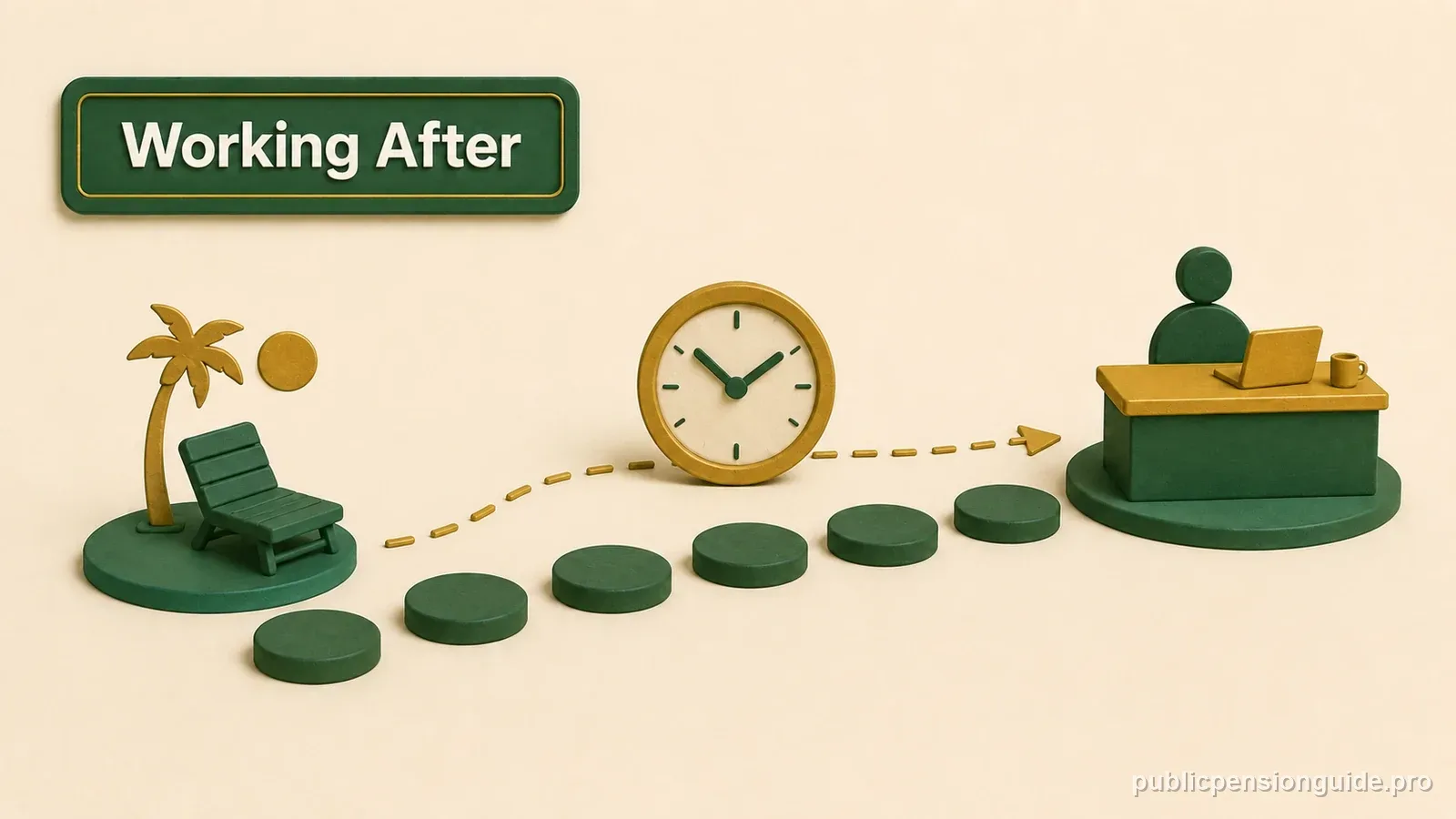
Florida FRS retirees generally need a six-calendar-month break before reemployment with an FRS employer. Returning too soon can void retirement and trigger repayment or benefit consequences.Quick facts
- 6 full calendar months is the critical FRS termination period before unrestricted reemployment with an FRS employer.
- July 1, 2024 is when Florida eliminated the former benefit-suspension period that had applied during calendar months 7–12.
- July 1, 2010 closed renewed FRS membership for Pension Plan retirees who later return to FRS employment.
Count full calendar months, not 180 days, before returning to an FRS employer
Florida’s reemployment rule turns on six calendar months after retirement, not a simple day count. MyFRS warns Pension Plan retirees that returning to employment with an FRS employer during that period can void the retirement and trigger repayment of Pension Plan benefits, including a DROP payout if one was received. The rule reaches more than a normal full-time job because the FRS definition looks at an employment relationship or services provided to an FRS employer in a broad range of arrangements.
The safest way to count is from the official retirement effective date and the plan’s own reemployment table, not from the last day in a classroom. Pension Plan retirement requires termination from all FRS employers and an effective retirement application. Investment Plan retirement status can arise through a qualifying distribution. Those starting points can differ, so a retiree who guesses the six-month end date from a resignation date can return too early even after a long summer break.
The old months 7 through 12 suspension rule was removed in 2024
Older FRS guidance often describes two reemployment phases: a six-month termination period followed by a benefit-suspension period through month 12. Florida changed that structure effective July 1, 2024. Current MyFRS guidance says that once a Pension Plan retiree has completed six calendar months, there are no restrictions on working for an FRS employer based on the reemployment timing rule, and Pension Plan benefits continue without the former months 7–12 suspension.
That change is important for substitute teachers and retirees who heard an older “wait a year” rule from a colleague. The current timing test is still strict during the first six calendar months, but a seventh-month return is no longer treated the way it was before the 2024 legislation. A retiree should nevertheless verify the current table before accepting work because the rule can be amended again and some disability or renewed-membership situations use separate provisions.
Outside employment is different from providing services to an FRS employer
MyFRS states that employment with a private employer, a public employer that does not participate in FRS, or an employer in another state does not by itself affect an FRS retirement benefit. The difficult cases are arrangements that look independent but still provide service to an FRS employer. Current guidance specifically warns about temporary work, adjunct service, OPS work, election poll work and third-party arrangements that furnish services to an FRS employer during the termination period.
For a retired teacher, that means the employer on the paycheck is not the only fact that matters. A staffing company placement inside an FRS school district can require a closer look than a job at an unrelated private employer. Before doing paid or unpaid work connected with a former district during the first six months, the retiree should describe the exact arrangement to the Division or MyFRS and obtain a rule-based answer rather than relying on the contractor label.
Separate termination from ordinary post-retirement employment
FRS retirement requires a valid termination, not merely a last day at work. Returning to an FRS employer during the first six calendar months can void Pension Plan retirement and create repayment obligations. That consequence is more serious than a temporary suspension and can include DROP money already paid.
After six full calendar months, the current rule is different. Florida eliminated the old months 7–12 benefit-suspension period effective July 1, 2024. A service retiree can generally return to an FRS employer after the six-month period and continue receiving the existing Pension Plan benefit.
| Timing | General Pension Plan consequence |
|---|---|
| First 6 calendar months | Retirement may be voided; repayment risk |
| After 6 calendar months | No timing-based benefit suspension |
| Private/non-FRS employer | FRS reemployment rule generally not triggered |
| FRS-related third-party service in first 6 months | Can still create a termination problem |
Use the official retirement effective date to count the six months
Count from the plan’s controlling retirement record, not from the school calendar. Pension Plan members establish an effective retirement date through the application and termination process. Investment Plan retiree status can arise through a qualifying distribution. A last instructional day and the plan’s retirement date are not always identical.
MyFRS publishes reemployment tables because the rule is expressed in calendar months rather than a simple 180-day count. Verify the official date, count six complete calendar months, and then set a start date. That method avoids errors caused by partial months or a summer break.
| Date | What it tells you |
|---|---|
| Last day worked | Employment event |
| Termination date | FRS employment relationship ends |
| Retirement effective date | Plan retirement begins |
| First unrestricted FRS reemployment month | After six-calendar-month period |
Do not expect new Pension Plan service credit after returning as a retiree
A Pension Plan retiree who returns after the waiting period generally does not start earning a second Pension Plan benefit. Renewed Pension Plan membership was closed for retirees initially reemployed on or after July 1, 2010. Salary can resume without recreating ordinary active-member pension accrual.
This matters when comparing a return-to-work offer. The retiree may receive salary and the existing pension after the timing restriction, yet the new job may not add service credit. A disability retiree or another special statutory category can have different rules and should be checked separately.
| Status | Typical retirement effect |
|---|---|
| Active member returns before retirement | Service can continue accruing |
| Pension retiree after 6 months | Existing pension continues |
| Pension retiree reemployed after 7/1/2010 | No renewed Pension Plan membership |
| Disability retiree returns to work | Separate recovery/benefit rules apply |
Checklist before you decide
- Confirm your official retirement effective date.
- Count six complete calendar months using the MyFRS reemployment table.
- Identify whether the proposed employer participates in FRS.
- Ask whether any third-party arrangement provides services to an FRS employer.
- Confirm whether the job creates any renewed-membership or disability-retirement issue before starting.
Frequently asked questions
How long must I wait to work for an FRS employer after retiring?
Current MyFRS guidance uses six full calendar months. Returning to an FRS employer or providing services to one during that period can jeopardize retirement and create repayment obligations. Use the plan’s official retirement date and reemployment table rather than counting 180 days from the last classroom day.
Do FRS retirees still have to wait 12 months before returning?
No under the current general service-retirement rule. Florida removed the former months 7–12 benefit suspension effective July 1, 2024. The first six calendar months remain critical. After that period, current MyFRS guidance says the timing-based restriction no longer suspends the Pension Plan benefit.
Can I substitute teach during the six-month FRS waiting period?
Substitute teaching for an FRS employer can count as employment or service during the termination period. MyFRS specifically warns about temporary arrangements. Verify the district’s FRS status and the exact start date before accepting an assignment during the first six calendar months.
Can I work for a private employer immediately after FRS retirement?
Generally yes if the private job does not provide services to an FRS employer. MyFRS says work for a private employer, a public employer outside FRS, or an employer in another state generally does not affect FRS retirement. Third-party placements back into an FRS employer should be checked separately.
Will I earn another FRS pension if I return after six months?
A Pension Plan retiree generally does not regain ordinary FRS membership merely by returning to work. Renewed Pension Plan membership was closed for retirees initially reemployed on or after July 1, 2010. The existing pension can continue, but new salary should not be assumed to create new Pension Plan service.
Where this comes from
Sources were reviewed on September 1, 2026. Rules and member records maintained by the retirement system control.
MyFRS — Reemployment After RetirementOfficial source ↗MyFRS — Working After RetirementOfficial source ↗This article provides general educational information. It is not a benefit determination or financial, tax, or legal advice. Confirm account-specific information with the retirement system.